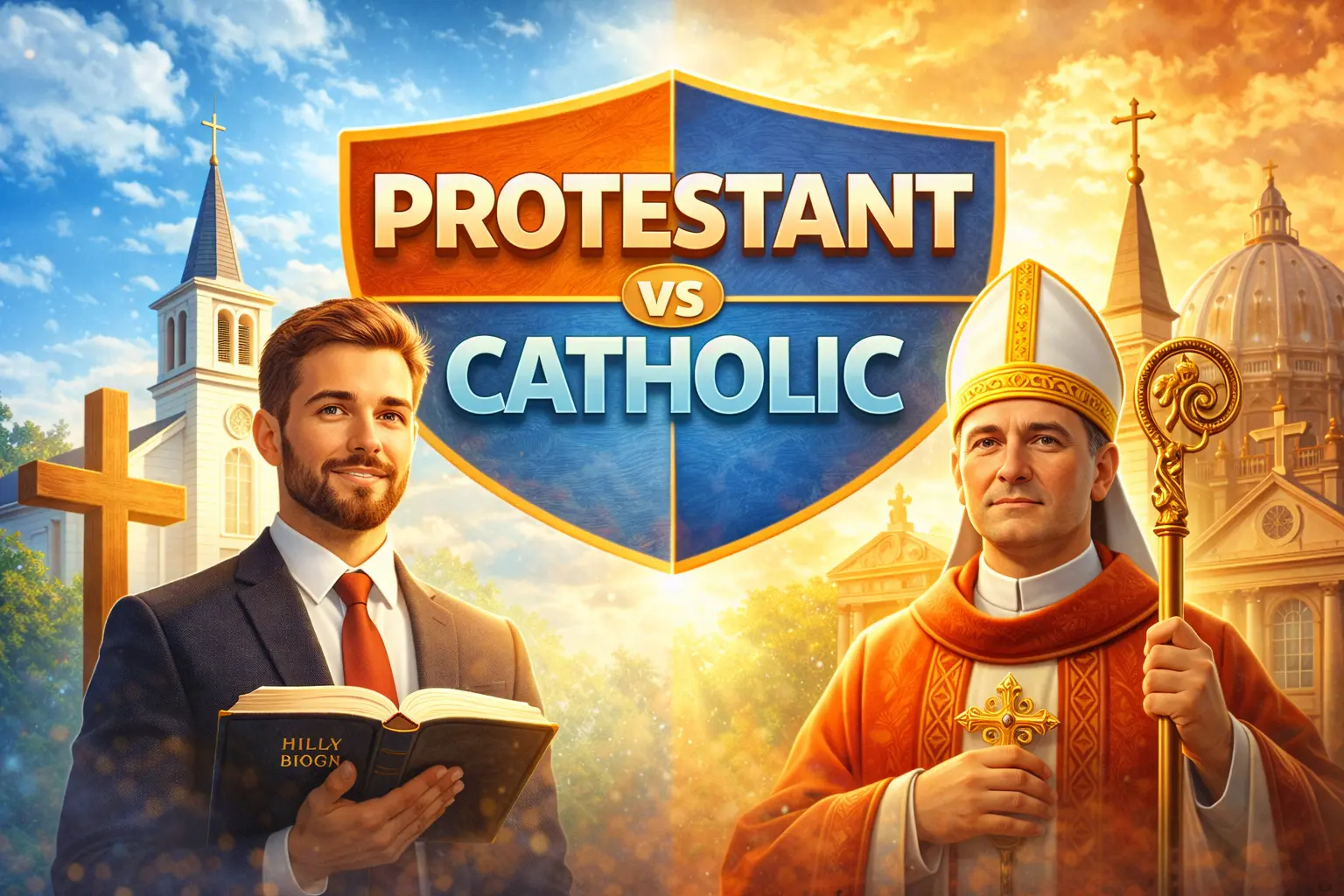
Christianity is one of the largest religions in the world, with billions of followers across different traditions. Among the most well-known branches of Christianity are the Protestant Church and the Catholic Church. Although both groups follow the teachings of Jesus Christ, believe in the Bible, and worship the same God, there are important differences in their beliefs, traditions, and church structures.
Understanding the discussion of Protestant vs Catholic helps people learn about Christian history, theology, and the reasons behind the different practices that developed over time. These differences did not appear suddenly; they are rooted in historical events, especially the Protestant Reformation in the 16th century.
Despite their distinctions, Catholics and Protestants share many core beliefs about faith, salvation, and the teachings of Christ. Exploring their similarities and differences allows people to gain a deeper understanding of Christian traditions and how they shape the lives of believers today.
The Historical Background of Protestant and Catholic Christianity
To understand the difference between Protestants and Catholics, it is important to look at the historical origins of both traditions. The Roman Catholic Church traces its roots back to the early Christian community established by Jesus Christ and His apostles. According to Catholic tradition, Saint Peter, one of the apostles, became the first leader of the Church in Rome, which later developed into the papacy.
For many centuries, the Catholic Church was the central authority in Western Christianity. However, during the early 1500s, a major religious movement known as the Protestant Reformation began in Europe. This movement challenged certain teachings and practices of the Catholic Church.
A key figure in the Reformation was Martin Luther, a German theologian who criticized practices such as the selling of indulgences. In 1517, Luther published his famous Ninety-Five Theses, which sparked widespread debate and eventually led to the formation of Protestant churches.
Over time, different Protestant denominations emerged, including Lutheran, Baptist, Methodist, Anglican, and Presbyterian traditions. Each group developed its own interpretations of scripture and forms of worship.
Authority: The Bible vs Church Tradition
One of the most significant differences in the Protestant vs Catholic debate is the question of religious authority.
The Catholic Church teaches that authority comes from three sources:
-
The Bible
-
Sacred Tradition
-
The teaching authority of the Pope and Church leaders
Catholics believe that these three elements work together to guide the Church in understanding God’s message. The Pope, who serves as the spiritual leader of the Catholic Church, is considered the successor of Saint Peter and holds a special role in preserving church doctrine.
Protestant Christians, on the other hand, generally follow the principle known as Sola Scriptura, which means “Scripture alone.” This belief teaches that the Bible is the highest authority for Christian faith and practice. While church leaders and teachers can help interpret scripture, Protestants believe that the Bible itself is the ultimate guide.
This difference in authority has shaped many other distinctions between Protestant and Catholic traditions.
Views on Salvation and Faith
Another important topic in the Protestant vs Catholic discussion is the understanding of salvation.
Catholic teaching emphasizes that salvation involves faith, good works, and participation in the sacraments. Catholics believe that faith must be expressed through acts of love, obedience, and service. The Church encourages believers to follow Christ through prayer, charity, and participation in sacraments such as Baptism and Eucharist.
Protestants typically emphasize the concept of Sola Fide, which means “faith alone.” According to this belief, salvation comes through faith in Jesus Christ rather than through human efforts or religious rituals. Good works are still important in Protestant teaching, but they are seen as a result of faith rather than a requirement for salvation.
Although these perspectives differ in emphasis, both traditions agree that salvation is made possible through the grace of God and the sacrifice of Jesus Christ.
The Role of the Pope
One of the most visible differences between Protestants and Catholics is the role of the Pope.
In the Catholic Church, the Pope is the spiritual leader of more than a billion Catholics worldwide. He lives in Vatican City and is considered the highest authority in matters of faith and church governance. Catholics believe the Pope continues the leadership role given to Saint Peter by Jesus.
Protestant churches do not recognize the authority of the Pope. Instead, leadership structures vary depending on the denomination. Some Protestant churches are led by bishops, while others are governed by councils of elders or individual pastors.
This difference reflects the broader Protestant belief that church authority should not be centralized in a single leader.
Worship Practices and Church Services
Worship services in Catholic and Protestant churches can look quite different, although they share many elements such as prayer, scripture reading, and singing.
In the Catholic Mass, the central focus is the Eucharist, also known as Holy Communion. Catholics believe that during the Eucharist, the bread and wine become the true body and blood of Christ through a process known as transubstantiation. The Mass follows a structured liturgy that has been practiced for centuries.
Protestant worship services tend to be more flexible and vary widely between denominations. Many Protestant churches place a strong emphasis on sermons, where pastors explain and apply biblical teachings to everyday life.
Music also plays a major role in Protestant worship, often including hymns or contemporary Christian songs.
Saints, Mary, and Prayer
Another difference in the Protestant vs Catholic conversation involves the role of Mary, the mother of Jesus, and other saints.
Catholics hold a deep respect for Mary and believe she has a unique role in God’s plan. They also ask saints to pray on their behalf, viewing them as faithful believers who now live in heaven with God.
Protestant Christians generally do not pray to saints or Mary. Instead, they believe that prayers should be directed directly to God through Jesus Christ.
This distinction reflects different interpretations of how believers should approach prayer and spiritual intercession.
Key Differences Between Protestant and Catholic Churches
The following table summarizes some of the main distinctions between the two traditions.
| Aspect | Catholic Church | Protestant Churches |
|---|---|---|
| Authority | Bible, Tradition, and Pope | Bible alone (Sola Scriptura) |
| Salvation | Faith, works, and sacraments | Faith alone (Sola Fide) |
| Church Leadership | Pope as highest authority | No central leader |
| Communion | Belief in transubstantiation | Often symbolic or spiritual |
| Saints and Mary | Veneration and intercession | Prayer directed only to God |
Similarities Between Protestants and Catholics
Despite the differences discussed above, Protestants and Catholics share many important beliefs.
Both traditions believe in Jesus Christ as the Son of God and Savior of humanity. They accept the Bible as sacred scripture, practice Baptism, and teach the importance of love, forgiveness, and compassion.
Both communities also emphasize the importance of prayer, worship, and moral living. In recent decades, many Christian leaders have worked toward greater cooperation and dialogue between Catholic and Protestant churches.
This movement, often called ecumenism, encourages unity and mutual understanding among Christians.
Why Understanding These Differences Matters
Learning about the differences between Protestants and Catholics helps people appreciate the diversity within Christianity. Each tradition developed its beliefs and practices through centuries of theological reflection, cultural influences, and historical events.
For believers, understanding these distinctions can strengthen faith and encourage respectful dialogue with others who may practice Christianity differently. For those studying religion or history, the Protestant-Catholic relationship provides insight into how religious movements shape societies and cultures.
Ultimately, both traditions seek to follow the teachings of Jesus Christ and live according to the message of love, grace, and redemption found in the Gospel.
Conclusion
The discussion of Protestant vs Catholic reflects centuries of history, theology, and spiritual tradition within Christianity. While differences exist in areas such as church authority, salvation, worship practices, and the role of the Pope, both groups share a deep commitment to the teachings of Jesus Christ.
Understanding these distinctions does not mean choosing sides; rather, it allows people to appreciate the rich heritage of Christian faith and the various ways believers seek to worship and serve God. By learning about both traditions, individuals gain a clearer perspective on the unity and diversity within the global Christian community.
